New URAR – Mixed Feedback

Newz: UAD 3.6 – 10 Biggest Changes,

UAD 3.6 – Mixed Feedback

April 17, 2026

What’s in This Newsletter (In Order, Scroll Down)

  • LIA AD: The Fine Print
  • The 10 Biggest Changes in the New URAR, By Kevin Hecht
  • Tiny Vermont Home That Spans Less Than 1,000 Square Feet Hits the Market for the Huge Price of $1.2 Million
  • Why Appraisers Write in the Third Person—and Whether First-Person Reporting Improves Clarity, By Jamie Owen
  • MY AD: Appraisal: Profession, Industry or Trade? by Martin Wagar
  • Rollout of 3.6 Receives Mixed Feedback, By Isaac Peck, Publisher Working RE
  • Starter Homes Are Disappearing—Are Modular and Manufactured Houses the Answer?
  • MBA: Mortgage applications increased 1.8 percent from one week earlier

———————————————————

 

——————————————————————-

The 10 Biggest Changes in the New URAR

By Kevin Hecht

Excerpts: The redesign of the Uniform Residential Appraisal Report is the largest overhaul of residential appraisal reporting in nearly three decades.

While the underlying appraisal principles remain the same, the structure, workflow, and level of detail in the report are changing in meaningful ways.

Here are the ten changes appraisers are most likely to notice.

Topics:

1. One Dynamic Report Replaces Multiple Legacy Forms

2. Reports Will Adapt to the Assignment

3. Data Fields Are More Granular

4. Commentary Is Integrated Throughout the Report

5. Scope of Work Drives Report Content

6. Inspection Observations Are More Structured

7. The Sales Comparison Approach Is Still Central

8. Software Platforms Will Change

9. Reports Will Include Both Narrative and Structured Data

10. The Transition Will Take Time

Summary

The new URAR represents a fundamental shift in residential appraisal reporting, moving the profession away from rigid, form‑driven responses and toward clearer, more transparent analysis.

While the core appraisal principles remain unchanged, how appraisers communicate their reasoning, observations, and conclusions will look different under the redesigned framework.

By understanding the most significant changes now, appraisers can better prepare for the transition and continue producing credible, well‑supported appraisal reports in an evolving reporting environment.

To read more, Click Here

My comments: Good topics list and summary. Read the details. Well written and understandable.
Read more!! →

Appraiser Obsolescence?

Newz: Appraiser Obsolescence, ASB – Use of Technology in an Appraisal or Review

April 10, 2026

What’s in This Newsletter (In Order, Scroll Down)

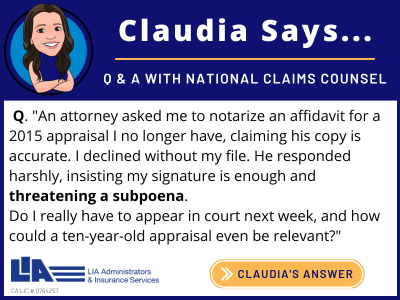
  • LIA AD: Subpoena Threat Over a 10-Year-Old Appraisal
  • Flags Over Facts: The Road to Obsolescence By Desiree Mehbod
  • Mayfield Ranch: The $4.5 Million Texas Estate on 100 Acres That Looks Like It’s Been Standing for Centuries
  • April Fools Day and Other Important Dates in Appraisal History
  • MY AD: How to Cut Business Expenses
  • March 2026 Housing Market Updates for Appraisers By Kevin Hecht
  • ASB Proposed New Advisory Opinion 41, Use of Technology in an Appraisal or Appraisal Review Assignment
  • MBA: Mortgage applications decreased 0.8 percent from one week earlier


——————————————————–

Flags Over Facts: The Road to Obsolescence

By Desiree Mehbod

Excerpts: For years, appraisers have been warning that the mortgage industry was slowly engineering us out of the process. We were told we were paranoid. Resistant to change. Stuck in the past. Then the newest Mortgage Credit Executive Order arrived, and the appraisal section opened with a single line that confirmed everything we’ve been saying: expand AVMs, desktops, hybrids, and AI. That’s the priority. Everything else in that section is just polite filler wrapped around a strategy to shrink the role of the human appraiser until we’re little more than a signature at the bottom of a dataset.

And that strategy becomes even clearer when you look at what’s happening behind the scenes. While UAD 3.6 is not fully active yet, the structure being built around it makes the intention impossible to miss. The new system demands an avalanche of hyper‑granular data that has nothing to do with how appraisers actually determine value. Room‑by‑room material ratings, finish classifications, fixture‑level detail, micro‑condition scoring. It’s a level of data extraction designed for machines, not humans.

No buyer cares whether the guest bath faucet is “mid‑grade chrome” or “builder‑grade brushed nickel,” but the new dataset does. Not because it improves valuation, but because it feeds the models. UAD 3.6 turns every full appraisal into a data‑mining operation, with the appraiser acting as the human data‑collection device for a system that wants our expertise now so it can automate it later.

To read more, Click Here

My comments: Worth reading. Discusses VA, Road to Housing Act and other topics. Knowledgeable author – the founder of Appraisers Blogs.

Read more!! →

Fannie Appraiser Update Q1 2026

Newz: Fannie Appraiser Update Q1, Suspended AMC, Bias

March 27, 2026

What’s in This Newsletter (In Order, Scroll Down)

  • LIA AD: Should I consider this an actual claim?
  • Fannie Appraiser Update Q1
  • 126-Year-Old Gentlemen’s Estate That Epitomizes Gilded Age Opulence Lists in the Berkshires for $8 Million
  • Suspended: The AMC That Turned “Review” Into a Value Demand
  • Retirement: To Stay, To Go, or Can’t Decide? That is the Question!
  • AQB Releases Job Analysis Report
  • A Baseless Bias Claim Turns Into a State Appraisal Crusade
  • MBA: Mortgage applications decreased 10.5 percent from one week earlier

———————————————————-

————————————————————————–

Fannie Appraiser Update Q1

Email Message 3/19/26

Welcome to the first Appraiser Update of 2026. This edition delivers timely information to help you stay competitive and ready for what’s next, including:

Preparing for the fast-approaching Uniform Appraisal Dataset (UAD) 3.6 and Forms Redesign mandate on Nov. 2, 2026;

Understanding Appraisal Quality Monitoring letters to appraisers related to time adjustments; and

Embracing expanded eligibility for manufactured housing and accessory dwelling units – available only for UAD 3.6 submissions.

Topics list

  • UAD 3.6 articles
  • Appraisal Software Selection
  • Treatment of Location and View
  • Market Conditions Analysis Letters
  • MH Policy Changes
  • ADU Policy Changes

To read the update, Click Here

My comment: Worth reading, of course. Always a very popular link!

Read more!! →

Paired Sales for Appraisers

Newz: Paired Sales Analysis, AI and Appraisers?

February 27, 2026

What’s in This Newsletter (In Order, Scroll Down)

  • LIA AD: When Confidentiality Agreements Conflict with USPAP
  • Paired Sales Analysis: Tips and Tools for Appraisers
  • Converted Church With Bell Tower and Pulpit Lists for $225K
  • Determining Assignment Conditions in a Vacuum By Jo Ann Aposto
  • MY AD: An Appraiser Gets Audited by the IRS! My Story Don’t Make My Mistakes! By Ann O’Rourke
  • Artificial Intelligence: Friend or Foe of Appraisers?
  • Fed moves to pull mortgages back into banking fold
  • MBA: Mortgage applications increased 0.4 percent from one week earlier

———————————————————————————

Click here to subscribe to our FREE weekly appraiser email newsletter and get the latest appraisal news


Paired Sales Analysis: Tips and Tools for Appraisers

By Kevin Hecht

Excerpts: Though not without challenges, paired sales analysis is a valuable technique to have in your appraisal toolkit. Mastering this method will help you develop more accurate, credible, and defensible appraisals.

This guide presents a step-by-step approach to performing paired sales analysis, practical tips and tools to improve your accuracy, plus strategies to overcome common challenges like sparse comparable data.

Paired Sales Analysis Example

For example, suppose two very similar homes in the same neighborhood sell within three months of each other. One house has a separate two-car garage, while the other does not. If the garage-equipped home sold for $15,000 more, you can reasonably infer that the garage adds $15,000 in value.

Uses

Primarily used in the sales comparison approach, paired sales analysis is particularly useful for estimating the value of unique property attributes such as:

  • Location advantages (corner lots, cul-de-sac positions, or waterfront access)
  • Scenic views or privacy features
  • Property upgrades (pools, finished basements, luxury kitchens)
  • Additional structures (workshops, guest houses, storage buildings)
  • Land size variations or irregular lot configurations

TOPICS

  • What is paired sales analysis
  • Step-by-Step Methodology of a Paired Sales Analysis…
  • Paired Sales Analysis Tips and Best Practices
  • Additional Tips Shared by Appraisers
  • Overcoming Challenges: What to Do When Data Is Sparse

To read more, Click Here

My comments: Comprehensive and definitely worth reading. I have regularly used paired sales, when I could find good comps. I often go back in time, as market conditions adjustments are easy to do. I got a few new ideas I had not thought of before in this article.

Read more!! →

5 Excel Resources and How-To Guides for Appraisers

Newz: Forecasts, Appraisal Forgery,
Excel Appraiser Resources

January 9, 2026

What’s in This Newsletter (In Order, Scroll Down)

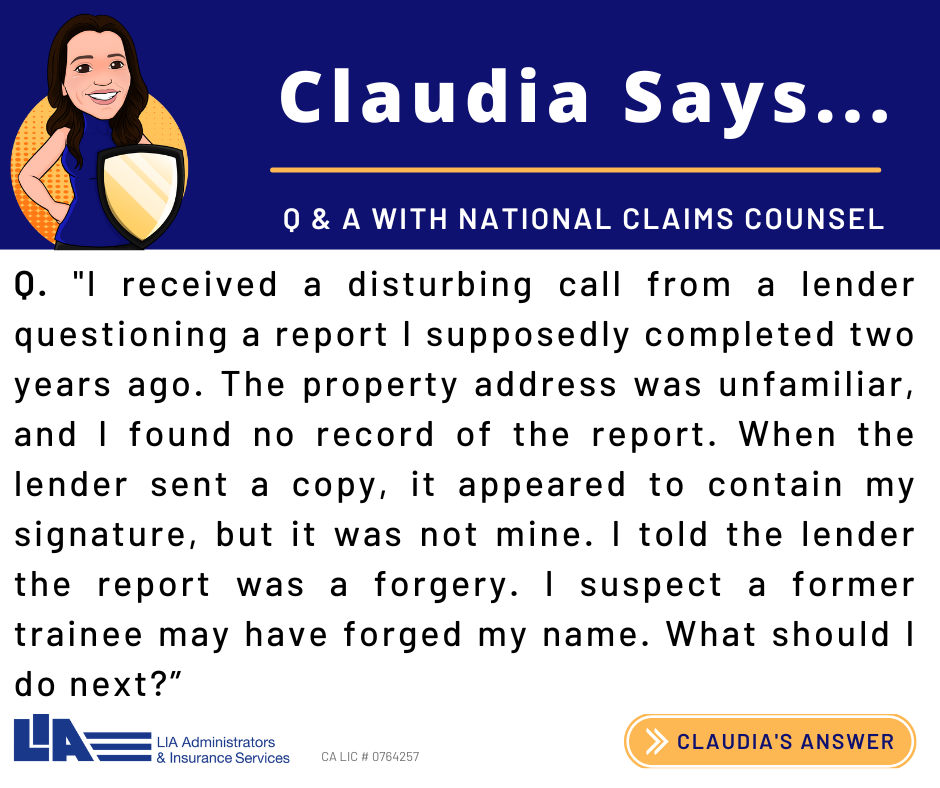
  • LIA ad: A Case of Forgery
  • 5 Excel Resources and How-To Guides for Appraisers
  • Appraisal By Jim Amorin, MAI
  • Rare Sculptural Masterpiece by Architect Charles Haertling Hits the Market in Boulder for Under $4 Million
  • USPAP and the State Board By Timothy Andersen, The Appraiser’s Advocate
  • 2026 Housing Market Forecast: The Great Recalibration Appraisal By Kevin Hecht
  • When Protecting Tenants Starts With Targeting Property Rights By Desiree Mehbod
  • MBA: Mortgage applications decreased 9.7 percent from two weeks earlier

———————————————-

Click here to subscribe to our FREE weekly appraiser email newsletter and get the latest appraisal news

———————————-

—————————————————-
5 Excel Resources and How-To Guides for Appraisers

By Jim Amorin, MAI

Excerpts: Are you getting the most out of Excel in your real estate appraisal work? If you’ve ever found yourself drowning in data or spending too much time on tedious tasks, it’s time to transform how you complete your appraisal tasks.

We’ll dive into five essential functions that can streamline your appraisal process and boost your efficiency as well as provide real-world examples to help you master these Excel tools and revolutionize your workflow.

VLOOKUP: Your Go-To for Vertical Data Retrieval

Imagine this: You’re working on an appraisal, and you need to verify the sale price of a property quickly. Instead of sifting through pages of data, VLOOKUP does the heavy lifting for you to pull information in a snap.

HLOOKUP: The Horizontal Companion

Now, let’s talk about HLOOKUP. If VLOOKUP is your vertical search tool, HLOOKUP is the horizontal counterpart. It’s perfect for those times when your data is organized across columns rather than rows.

XLOOKUP: The All-Rounder

XLOOKUP was introduced in 2019 as the successor to the VLOOKUP and HLOOKUP functions. XLOOKUP empowers real estate appraisers to navigate vast datasets seamlessly and enhance the precision of their valuations.

IF Statements: Decision-Making Made Simple

In Excel, the IF statement acts like a swift decision-maker, constantly asking, “Is this true or false?” Based on the response to this straightforward yet powerful question, Excel takes a divergent path, calculating different outcomes for the true condition compared to the false one.

To read more, Click Here

My comments: Understandable. I had never heard of this software. Detailed answers on how to use the tools by an expert: Jim Amorin, MAI

Read more!! →

Appraising with Inventory Shortages and Surpluses

Newz: UAD Quality Ratings,

Appraising with Inventory Shortages and Surpluses

December 5, 2025

What’s in This Newsletter (In Order, Scroll Down)

  • LIA AD: When a Property Owner Wants to Do the Appraiser’s Job
  • Understanding UAD Quality Ratings (Updated for UAD 3.6 and the New URAR)
  • Gothic-Inspired ‘Fairytale Castle’ in Miami’s Exclusive Coconut Grove Michigan Hits the Market for $24 Million
  • Navigating the Challenges of Inventory Shortages and Surpluses in Real Estate: Insights from a Chief Appraiser at a National AMC By Jim Jenkins, Chief Appraiser
  • What Is a Scatter Chart Analysis in Appraisal?
  • 53% of U.S. homes lost value in the past year, the most since 2012 – Zillow
  • MBA:  Mortgage applications decreased 1.4 percent from one week earlier

————————————-

Click here to subscribe to our FREE weekly appraiser email newsletter and get the latest appraisal news

————————————————

—————————————-

Understanding UAD Quality Ratings (Updated for UAD 3.6 and the New URAR)

Excerpts: Quality ratings are one of the most familiar parts of UAD, but the way appraisers report them has changed under UAD 3.6 and the new dynamic Uniform Residential Appraisal Report (URAR). While the Q1–Q6 scale remains in place, the way you apply, support, and reconcile quality is more structured and data-driven than in the legacy forms.

What “Quality” Means in UAD 3.6

In UAD 3.6, quality represents the materials, craftsmanship, and construction standards of a dwelling. The familiar Q1 through Q6 framework still applies, but the workflow is different:

Quality is no longer a single, form-level checkbox.

You now provide quality ratings in multiple places:

  • Exterior Quality Rating (Dwelling Exterior section)
  • Interior Quality Rating (Unit Interior section)
  • Kitchen and Bathroom Detail tables
  • Overall Quality (reconciled in Section 15)
  • The “overall” rating is informed by the component-level data you report in these earlier sections.

Other topics include:

  • What Does UAD Stand For?
  • What Are the Quality of Construction Ratings?
  • Breaking Down the UAD Quality Ratings (Q1–Q6)
  • How Quality Is Applied in the New URAR
  • Tips for Applying Quality Ratings Credibly

Final Thoughts

Quality ratings remain an important part of UAD, but the approach is more precise now. UAD 3.6 pushes appraisers to rely on observable details rather than broad descriptions or market norms. When you follow the definitions, support your ratings with the structured data, and reconcile logically, the quality rating becomes a clear and defensible part of your analysis.

To read more, Click Here

My comments: Comprehensive and well written. Worth reading.

Read more!! →

ADU vs. Two-Family Property for Appraisers

Newz: ADU vs. Two-Family Property,
Everyone Must Be Ready for UAD 3.6

November 21, 2025

What’s in This Newsletter (In Order, Scroll Down)

  • LIA: Protecting My Appraisal Report
  • How to Identify a Single-Family with ADU vs. Two-Family Property
  • $1 Million Midcentury Modern Ranch House on Lake Michigan Holds a Wild Surprise in the Basement
  • Top Appraisers Advise on How to Generate New Business
  • When One Bulb Fails… Why Everyone Must Be Ready for UAD 3.6 By Tony Pistilli
  • A Real Estate Agent’s Guide to Understanding the New UAD 3.6 Appraisal Report By Tom Horn
  • MBA: Mortgage applications decreased 5.2 percent from one week earlier

———————————————————————-

SFR or 2 units with an ADU?

Click here to subscribe to our FREE weekly appraiser email newsletter and get the latest appraisal news


————————————————————–

How to Identify a Single-Family with ADU vs. Two-Family Property

Excerpts: Across the country, accessory dwelling units (ADUs) are becoming more common. Cities and counties are updating zoning laws to encourage them, whether to increase housing supply, create affordable rental options, or allow families to live closer together. Appraisers need to understand how ADUs fit into their local markets, how they’re used and perceived, and how to properly distinguish them from true two-family properties.

The presence of an additional living unit can complicate the appraisal process by making it difficult for you, the appraiser, to know how to classify the subject property. How do you know whether you’re dealing with an accessory dwelling unit (ADU) or a second unit? In this article, you’ll learn about ADU meaning and types as well as how to identify a single-family with ADU vs. two-family property.

Topics include:

  • What Is an ADU?
  • Do ADUs Add Value to a Property?
  • Types of ADUs
  • What Is a Two-Family Property?
  • Is It a Single-Family with an ADU or Two-Family Property?

To read more and watch an ADU video, Click Here

My comments: Good explanations of ADU issues. Well done short video. UAD 3.6 requires including details on ADUs.

Read more!! →

Fannie Mae’s Selling Guide Updates

Newz: Fannie Mae’s Selling Guide Updates, Appraisers and Certainty in Mortgage Lending

November 14, 2025

What’s in This Newsletter (In Order, Scroll Down)

  • LIA: Conflicting Assignments and Professional Ethics
  • Beyond Terminology: What Fannie Mae’s Selling Guide Updates Mean for Appraisers
  • Genius’ Midcentury Modern Home Designed by Jimi Hendrix’s Studio Architect Lists in Woodstock for $3.5 Million
  • App-solutely Clueless: When Sales Tries to School Appraisers
  • Trump Defends 50-Year Mortgage Plan as ‘Not a Big Deal’ After Furious Backlash
  • The Strategic Advantage of Certainty in Mortgage Lending What it means for appraisals
  • MBA: Mortgage applications increased 0.6 percent from one week earlier

—————————————————————

Changes to Fannie Selling Guide dated April 15, 2014

Click here to subscribe to our FREE weekly appraiser email newsletter and get the latest appraisal news

————————————————————

—————————————————————

Beyond Terminology: What Fannie Mae’s Selling Guide Updates Mean for Appraisers

by Scott DiBiasio, Director of Government Affairs, Appraisal Institute

Excerpts: Fannie Mae recently issued important updates to its Selling Guide that may look like technical revisions but have significant implications for appraisers, consumers, and the valuation profession. The most visible changes involve the retirement of the term “appraisal waiver” in favor of “value acceptance” and adjustments to the Reconsideration of Value (ROV) process. Together, these changes reflect the GSEs’ modernization priorities—but also highlight the ongoing tension between efficiency and transparency.

From “Appraisal Waiver” to “Value Acceptance”

Fannie Mae has decided to eliminate the term “appraisal waiver” from the Selling Guide, replacing it entirely with “value acceptance.” Even the parenthetical “(appraisal waiver)” has been removed. The stated goal is to unify industry language and create consistency across the valuation spectrum.

That may sound harmless, but let’s be clear: the average consumer is not going to recognize that “value acceptance” means their lender has waived an appraisal altogether. That lack of clarity undermines transparency at a critical stage of the lending process.

The Appraisal Institute (AI) will absolutely continue to call these products what they are: appraisal waivers. Language matters. Consumers and appraisers alike deserve accuracy, not euphemisms, when it comes to understanding whether an independent appraisal has been performed.

Why This Matters for Appraisers

Taken together, the Selling Guide updates and the expansion of waiver-based models point to several key takeaways:

1. Language shapes perception. If consumers don’t recognize that value acceptance is an appraisal waiver, transparency suffers. That’s why AI will continue to call these products by their true name.

2. Efficiency is not clarity. Simplifying disclosures may ease compliance for lenders, but it risks reducing borrower awareness of their rights.

3. Modernization is accelerating. With waivers, UPDs, and hybrid appraisals expanding, appraisers must adapt their skills to remain at the center of the valuation process.

4. Incursion is real. Regulators, property data collectors, and third-party vendors are positioning themselves between appraisers and their clients. The profession cannot afford to cede ground.

To read more, Click Here

My comments: I had never read about what is discussed in this article. I don’t always read the Fannie Selling Guide Updates. Now I know why it is important.

When I wrote my article on Appraisal Regulatory Chaos in the monthly Appraisal Today newsletter, Scott let me include excerpts from what he has written about it plus sent me new information. This article has a few “promotional” comments about AI and classes, but well worth reading.

Read more!! →

Bias in Appraisals. What Does It Mean?

Newz: Tariffs Effects on Home Building,
The Cupola and Its Cooling Comeback

October 17, 2025

What’s in This Newsletter (In Order, Scroll Down)

  • LIA AD: Unreasonable Subpoena Request
  • California home built around giant boulder lists for $2 million
  • What’s That Box on the Roof? The Cupola and Its Cooling Comeback
  • Trump’s Tariffs on Lumber and Cabinetry Kick In, Hitting Homebuilding and Renovation
  • The Appraiser’s Guide to Evaluating Home Value Before You Buy
  • Mortgage applications decreased 1.8 percent from one week earlier

—————————————————–

Click here to subscribe to our FREE weekly appraiser email newsletter and get the latest appraisal news

—————————————————————-

——————————————————————–

What does “bias” in appraisal really mean?

Hal Humphreys

and Peter Christensen Video

Excerpts: What constitutes “bias” in appraisal isn’t always what you expect, according to an attorney who handles cases involving appraisers.

Now let’s zoom in on bias. This topic does NOT inspire feelings of neutrality in the appraisal community. That non-neutrality comes out (a bit explosively) in comments threads and appraiser forums, and sometimes even in the classroom. I’ve sat in on several of Peter Christensen’s in-person classes on bias and fair housing law, and invariably somebody in class pushes back. Sometimes the air gets pretty hot and hostile. But Peter always handles the pushback with calm and aplomb. He hears folks out, responds respectfully, and steers the conversation back to his thesis — that bias exists, and it can take forms that we don’t necessarily expect.

In a brief interview I did with him (see the video below), he tells a story about a case he handled, in which an appraiser’s report was found to exhibit bias to a homeowner whose political views he loathed. Peter tells this story in his class, and it always surprises people, because they’ve seen this divide in their own lives and can imagine something like this actually happening.

I thought I knew what bias looked like, but I’ve begun to realize that it can creep in when we’re least expecting it. —Hal Humphreys

To read more and watch the video, Click Here

My comment: Interesting analysis. Very good video. Worth watching the video and reading the text.

Read more!! →

Why AI Can’t Replace Appraisers

Newz: Why AI Can’t Replace Appraisers,
Value: Absolute or Relative?

October 3, 2025

What’s in This Newsletter (In Order, Scroll Down)

  • LIA AD: Weather Impact
  • Five Reasons AI Cannot Replace Real Estate Appraisers, By Timothy Andersen
  • Malibu (CA) Waterfront Home for $110,000,000
  • How Bureaucratic Overreach Turned Real Estate Appraisers into Scapegoats
  • September 2025 Housing Market Updates for Appraisers
  • Value: Relatively Absolute or Absolutely Relative?, By Brent Bowen
  • Mortgage applications decreased 12.7 percent from one week earlier

——————————————-

Click here to subscribe to our FREE weekly appraiser email newsletter and get the latest appraisal news

—————————————————————–

Five Reasons AI Cannot Replace Real Estate Appraisers

by Timothy Andersen

Excerpts:

QUESTION: When I got involved in real estate appraisal, nobody ever told me about AI, UAD 3.6, AVMs, and all the changes that would take place. I can’t keep up with these changes and the changes I will have to make to the way I appraise and report those appraisals. Please tell me there is some good news out there about the way I have chosen to make a living! Is there any such news?

RESPONSE: Traditionally, when there were questions of real property value, the party with the questions called a real property appraiser to answer them. Real estate appraisers are professionals who estimate the value of properties like homes or land. They are trained, licensed experts who visit properties, study local markets, and follow ethical rules to make fair valuations. Lately, artificial intelligence (AI) and computer models called Automated Valuation Models (AVMs) are helping estimate property values, thus possibly decreasing the demand for real estate appraisers.

From your question, you are asking if these innovations in AI are going to take your job. In all candor, AI is going to take some appraisal jobs. But the good news is that, with some upgrading on your part, that should not be a worry.

Reason 1

One reason you’ll get all the credit (or blame) is that humans exercise judgment, follow ethics, and accept responsibility. Algorithms cannot execute these since, to some extent, judgment, responsibility, etc. have an emotional component to them, rather than purely logic or reason. Remember, AI is a tool to help you. In so many ways it cannot replace you (nor was that its design).

Reason 2

One reason you’ll get all the credit (or blame) is that humans exercise judgment, follow ethics, and accept responsibility. Algorithms cannot execute these…

Reason 3

One reason it cannot replace you is simply because AI (i.e., AVMs) struggles with unique or complex houses, especially if those are rural properties…

Conclusion

At this point in the response, you rightly ask, “What does any of this have to do with me!?” That answer is essentially up to you….

To read more, Click Here

My comments: What AI means for your appraisals (and many jobs) can be scary. This article is understandable and comprehensive. Worth reading the details.

Read more!! →